Rakhi is one of the important festivals and is celebrated with a lot of pomp and splendor. It is an important festival commemorating the love between a brother and a sister. The day of Raksha Bandhan has a lot of significance because it is on this day that a sister ties a thread on a brother's hand and prays for his well-being, prosperity, and long life. In turn, the brother vows to protect her sister from evil. Rakhi follows the lunar calendar and is celebrated on a full moon day of the lunar month, Shravan. The festival generally falls in August every year. The festival of Rakhi is held according to the lunar calendar and is celebrated on a full moon day of Shravan, the lunar month.
What is the Meaning of Rakhi
The word "Rakhi" originates from the Sanskrit word "Raksha" (रक्षा), meaning protection. This festival is celebrated primarily in India, Nepal, and other parts of South Asia. It is commonly associated with the Hindu festival Raksha Bandhan, where sisters tie a sacred thread (rakhi) around their brothers' wrists. This is a symbol of love, protection, and goodwill, and in return, the brothers vow to protect and support their sisters. This is celebrated in full grandeur, and exchanging gifts is another important part of the day. Beyond blood relations, rakhi is also tied to friends and even soldiers, symbolizing universal brotherhood. It celebrates the unity, love, and care among people. More than a thread, rakhi represents love, duty, and lifelong commitment.
History of Rakhi
Rabindranath Tagore and Rakhi as a Symbol of Unity
During the 1905 Partition of Bengal, Nobel laureate Rabindranath Tagore encouraged people to celebrate Raksha Bandhan as a symbol of unity and harmony. He promoted the tying of Rakhi among communities to strengthen feelings of brotherhood and social solidarity. This interpretation expanded Raksha Bandhan’s meaning from a family festival to a symbol of social unity and collective harmony.
Source References:
- Historical accounts of the Swadeshi Movement (1905–1908)
- Writings and speeches associated with Rabindranath Tagore’s role in the anti-partition movement
The tradition of tying a sacred thread around the wrist has deep roots in Indian culture, with references found in ancient texts, mythology, and historical accounts. Over time, Rakhi has evolved from a ritual symbolizing protection and blessings into a broader celebration of emotional connections, family values, and social harmony.
The Story of Lord Krishna and Draupadi
Lord Krishna killed the devil King Shishupal in order to protect and ensure Dharma on earth. In the battle, Lord Krishna's finger got injured and started bleeding. Draupadi noticed this and tore a piece of her saree and tied it around it to stop the bleeding. Her concern and love were recognized by Lord Krishna. She had a sisterly affection and compassion that touched him. He promised to be there for her and protect her from all the perils. Years later, when the Pandavas lost Draupadi to the Kauravas in the game of dice, Lord Krishna used his divine powers to save Draupadi’s honor and dignity during the time of ‘Vastraharan ’.
Source Reference:
- Mahabharata- The incident of Krishna and Draupadi’s bond is part of later devotional retellings and interpretations; the specific Rakhi association is not explicitly described in the earliest Mahabharata text.
The Legend of King Bali and Goddess Lakshmi
The demon king Mahabali worshiped Lord Vishnu. Owing to his sincerity, faith, and devotion, he left his homeland in Vaikundam and took the oath to protect Bali. This agonized his wife, Goddess Lakshmi, as she wished to stay with her husband. Taking up the disguise of a Brahmin woman, Lakshmi went to King Bali and sought refuge in the castle. On the day of Shravana Purnima, or full moon day, she tied a rakhi around King Bali's wrist. Later, Goddess Lakshmi revealed her true identity and the reason behind her visit. This left the king overwhelmed. Bali asked Lord Vishnu to go to Vaikuntam with his bride. Since then, inviting one's sister to tie an auspicious thread of Rakhi for Raksha Bandhan on Shravana Purnima has become customary.
Source Reference:
- Vishnu Purana -The broader story of Vishnu, Bali, and Lakshmi appears in Puranic traditions; the Raksha Bandhan connection is a later traditional association.
The Vedic Saga
During the Vedic Period, on the day of 'Shravan Poornima,' the demons and the deities were engaged in a grim battle. The demons were in a strong position, and the deities suffered losses. Indra, the king of deities, was worried about the outcome of the battle. His wife Indrani could not see his pain and prayed to God. Being a religious lady herself, she prepared a talisman and tied it around the right wrist of Indra. This talisman helped Indra win the battle. As the talisman had the power to protect, it was called "Raksha Sutra," and the ceremony of tying it was called "Raksha Bandhan".
Source References:
- Atharvaveda – Contains references to protective charms, rituals, and prayers associated with safeguarding individuals.
- Yajurveda – Describes ritual practices involving sacred offerings, chants, and ceremonial traditions.
- Traditional interpretations of Raksha Sutra rituals are found in Hindu religious practices.
The Tale of Rani Karnawati and Emperor Humayun
The most well-known historical example is the tale of Rajputana Rani Karnavati and Mughal Emperor Humayun. Rajputs defended their Kingdom from Muslim invasion during the Middle Ages. Since then, the concept of Raksha Bandhan signified dedication and care for one's sister. The widowed queen of the Chittor king was known as Rani Karnawati. She came to the conclusion that she would not be able to defend her kingdom from the invasion of Bahadur Shah, the Sultan of Gujarat. She sent a Rakhi thread to the Mughal Emperor Humayun. The Emperor was so moved by this gesture that he immediately led his men in that direction to save Chittor.
Source References:
- Humayun Nama (does not clearly mention this Rakhi episode)
- Historical discussions on medieval Indian traditions and later folklore interpretations
The story of Lord Indra and Indrani
The festival was not always celebrated as we do it in the present. The custom was not restricted only to brothers and sisters. As the essence of the festival is to cherish and protect each other, it was also celebrated by husband and wife in the ancient era. There is a mythology in prehistoric India that says that Indrani, the wife of Indra, used to tie a thread, which was symbolized as a Rakhi, before he went to fight demons. The purpose of tying the thread in the hand was to emphasize the emotion of protection for the loved ones. This story contradicts the present meaning of the festival.
Source Reference:
Significance of Rakhi
A festival is the best way to celebrate glorious heritage, culture, and traditions. India is a country of rich cultural heritage. Just like every other festival, Raksha Bandhan is not just about celebrations or merrymaking. It is a festival that is imbued with rich underlying significance that has a spiritual, scientific, and social context. Rakhi is not restricted to the love and warmth shared between siblings. It emphasizes nurturing purity in thought, soul, word, and deed. The spiritual, scientific, and social significance of Raksha Bandhan enables us to put things into perspective and understand the underlying meaning of the festival in depth.
Spiritual Significance of Rakhi
The spiritual significance of Raksha Bandhan is when one takes a sacred divine vow of purity with God to live a life of purity in thoughts, words, and actions. This sacred thread, called a rakhi, is a gentle reminder to protect ourselves spiritually from vices. It upholds the values of protection, establishes righteousness, and destroys the evils of society. Raksha Bandhan is an occasion that establishes 'Papa Todak, Punya Pradayak Parva'. It is the day that bestows boons and removes sins as mentioned in the ancient scriptures. The Rakhi rituals signify the spiritualism that is intertwined with it. The ‘Tilak’ signifies soul consciousness, which is a symbol of being victorious over body consciousness. Tying a Rakhi signifies the vow of purity taken by all souls. Even in the yesteryears, the rishis or gurus tied rakhi to the disciples who sought their blessings and promised to guide them on the spiritual path. They also tied the sacred thread to themselves to safeguard them from all potential dangers.
Scientific Significance of Rakhi
Raksha Bandhan is celebrated during the month of Shravan according to the Hindu calendar, which is considered an auspicious period dedicated to Lord Shiva. The festival is also known as Rakhi Purnima because it falls on the full moon day. Traditionally, the full moon is believed to influence the natural energies of the earth and living beings. Just as the gravitational pull of the moon affects ocean tides, ancient beliefs suggest that the fluids within the human body may also experience changes during this period.
According to traditional perspectives, the full moon phase was considered a time when people could be more vulnerable to physical and emotional disturbances such as tension, fluctuations in blood pressure, and lack of sleep. Based on these health-related and environmental observations, ancient scholars and saints introduced practices centered around care, protection, and well-being.
Raksha Bandhan became a significant occasion where a Rakhi, or sacred thread of protection, is tied around the wrist of a brother as a symbol of love, blessings, and safeguarding against negative influences. Traditionally, Rakhi threads are often found in shades of red, orange, and yellow, colors that hold symbolic importance. According to the principles of color therapy beliefs, these colors are associated with energy, digestion, the pancreas, and the upward movement of bodily energies.
The Rakhi is generally tied on the right wrist, as per Hindu traditions, because the right hand is considered auspicious and is traditionally used for sacred rituals and important actions. The wrist is also believed to be an important connection point in the body, and traditional practices associate tying a sacred thread around the wrist with maintaining balance and protection.
Another important ritual of Raksha Bandhan is applying a tilak on the brother’s forehead. This practice is followed during many Hindu ceremonies and celebrations. Traditionally, the forehead area is associated with the pineal gland, often referred to in spiritual traditions as the “seat of the soul” or the “third eye.” Applying tilak is believed to stimulate this area, promoting calmness, focus, and positive energy.
Together, these rituals reflect the traditional belief that Raksha Bandhan is not only a celebration of sibling love but also an occasion centered around protection, blessings, harmony, and overall well-being. The Rakhi thread, sacred colors, and tilak ceremony collectively represent the ancient wisdom of combining emotional bonds with spiritual and cultural practices.
Social Significance of Rakhi
Raksha Bandhan has played an instrumental role in bringing about social change. The sentiments and emotions associated with this festival involve cultural and moral values. It upholds the universal spirit of brotherhood, harmony, and peaceful coexistence. The festival of Rakhi got a new meaning with Rabindranath Tagore. He led a protest against the decision of British Viceroy Curzon to divide Bengal on religious grounds. He urged Hindus and Muslims to tie Rakhi on each other’s wrists to express harmony and solidarity among each other. The ceremony united the communities against the evil designs of the British rulers and started a rebellious movement. Today, Rakhi is not restricted to sending rakhi threads to brothers and sisters. It is also the day to express love, harmony, and the true spirit of brotherhood among humans.
Even in today's scenario, Raksha Bandhan has a different perspective altogether. This is the day women tie rakhis on the wrists of their brothers while the brothers promise to protect and be there for their sisters. In a society that swears by the objectification of women, this auspicious festival teaches its men to be protectors, not perpetrators. It is a festival that not only celebrates the warmth of love between the siblings but also teaches men to look at other women in society just like sisters and protect their honor even if they are not related by blood. Besides, it also teaches its men and women to care for, love, support, and respect each other. Today, Rakhi is not restricted to sending rakhi threads to brothers and sisters. It is also the day to express love, harmony, and the true spirit of brotherhood and togetherness among humans.
Connecting with the Roots
More than a festive ornament, Rakhi represents the bond of love, trust, protection, and lifelong support between siblings. The ritual of tying the Rakhi symbolizes a sister’s prayers for her brother’s well-being, while the brother’s promise reflects his commitment to care for and support her.
Beyond the brother-sister relationship, Rakhi has evolved into a broader symbol of family unity, respect, and emotional connection. Many communities celebrate it as a way of strengthening relationships with cousins, close friends, and loved ones. The festival also reflects values such as gratitude toward family, preservation of traditions, and the importance of maintaining connections across generations.
The designs and materials used in Rakhis often carry symbolic meanings:
- Mauli or sacred thread Rakhis represent blessings, protection, and purity.
- Om Rakhis symbolize peace, spirituality, and positive energy.
- Rudraksha Rakhis represent strength, protection, and spiritual well-being.
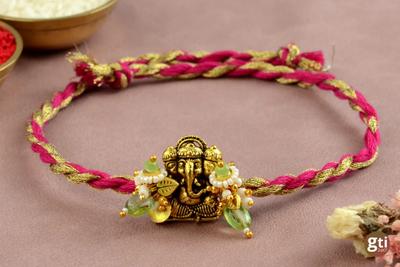
- Ganesh Rakhis signify wisdom, success, and the removal of obstacles.
- Handcrafted and regional Rakhis represent cultural heritage and traditional craftsmanship.
Distinct Raksha Bandhan Traditions Followed by Families
1. Traditional Puja-Based Celebrations
Many families begin Raksha Bandhan with a prayer ceremony before tying the Rakhi.
Family Tradition:
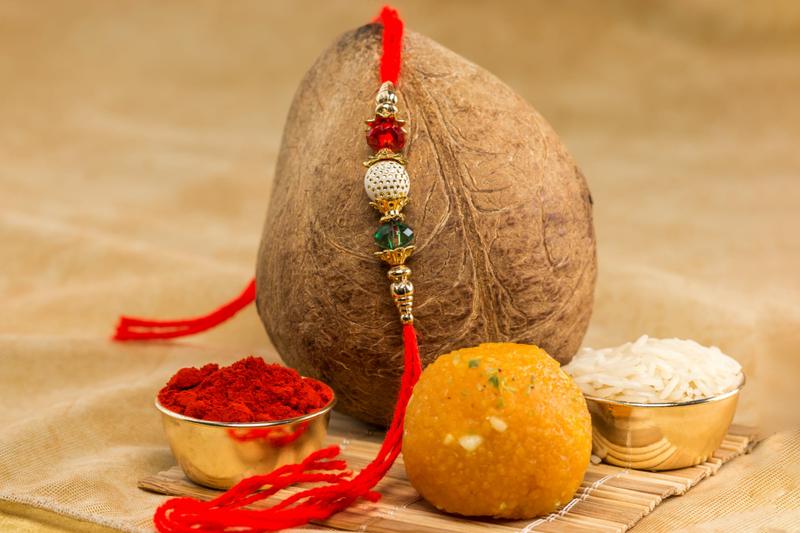
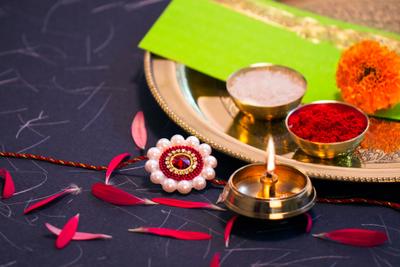
- Preparing a decorated Rakhi thali with diya, roli, rice grains, sweets, and the Rakhi.
- Offering prayers for the sibling’s health, happiness, and prosperity.
- Seeking blessings from elders before beginning celebrations.
Cultural Meaning:
This tradition highlights the spiritual aspect of Raksha Bandhan and connects the celebration with family values and blessings.
2. Generational Rakhi Customs
Several families continue rituals passed down from grandparents and parents.
Family Tradition:
- Using the same type of traditional Rakhi every year, such as Mauli or silk-thread Rakhis.
- Following family-specific prayers or rituals.
- Sharing childhood stories and memories during the celebration.
Cultural Meaning:
These customs help preserve family heritage and create a sense of continuity between generations.
3. Family Feast and Sweet Exchange
Food plays an important role in Raksha Bandhan celebrations.
Family Tradition:
- Preparing special festive meals at home.
- Sharing traditional sweets such as laddoos, barfi, and homemade desserts.
- Exchanging favorite dishes among family members.
Cultural Meaning:
Sharing food symbolizes happiness, togetherness, and strengthening family bonds.
4. Long-Distance Rakhi Celebrations
Families separated by cities or countries have adapted their traditions while maintaining the emotional connection.
Family Tradition:
- Sending Rakhis and gifts through delivery services.
- Celebrating through video calls.
- Opening gifts together virtually.
- Recording Rakhi moments to share with family members.
Cultural Meaning:
These practices show how traditions evolve while preserving the emotional essence of the festival.
5. Regional Family Traditions
Families often incorporate customs influenced by their regional backgrounds.
Examples:
Rajasthan and Gujarat: Families may include decorative Lumba Rakhis for sisters-in-law.
Maharashtra: Some families celebrate Raksha Bandhan alongside Narali Purnima traditions.
Bengal: Families may focus on artistic, handcrafted Rakhis and community bonding.
South India: Families often prefer spiritual Rakhis featuring symbols like Om, Ganesh, or Rudraksha.
Cultural Meaning:
Regional variations showcase India’s diversity while maintaining the universal message of sibling love.
The cultural significance of Rakhi lies in its ability to transform a simple thread into a powerful symbol of love, protection, gratitude, and family connection. While every family may celebrate differently—through traditional rituals, handmade Rakhis, festive meals, or modern gifting—the essence remains the same: honoring the special relationships that bring families together across generations.
Rakhi Traditions
1. Beginning the Day
Rakhi is an important festival in most Indian households. It is not just about a sister tying the rakhi on her brother’s wrist. The gods are also appeased at the beginning of this day through prayers and offerings. Families wake up early in the morning and bathe to purify themselves before making these arrangements.
2. Preparing the Rakhi Thali
The sister prepares a thali with Roli (vermilion), Chawal (rice), Diya (earthen lamp), sweets, and the rakhi thread. Rakhi has an enormous emotional value for many. The rakhi thread is often made by the sister or, if not made, then bought by the sister; hence, when they are not around, they can prepare for the day by sending online rakhi gifts for their brother. The handmade rakhis add to the charm of this festival of brother-sister love.
3. Following the Rituals
The rituals followed on Rakhi are done at a predetermined auspicious time. This varies from year to year depending on the luni-solar positions. The sister begins the celebration by applying Tilak on her brother’s forehead. The Tilak is made of the Roli and Chawal that are on the thali. She then ties the holy thread around her brother’s wrist while chanting a prayer for his long and healthy life.
4. Tying the Sacred Thread
The sacred thread is tied to the right wrist of the brother. It is considered auspicious and traditional according to Hindu mythology. According to Ayurveda science, scholars found that this ancient system advocates the use of the right hand for tying rakhi because it holds the belief that Vata, Pitta, and Kapha get regulated. This is why the brothers extend their right wrist while their sisters tie the Rakhi and bless them.
5. Aarti
The tying of the Rakhi is followed by an Aarti. The sister wards off all evil energies from around her brother through this. She again chants a prayer while performing the Aarti. In the end, she seeks the blessing of her elder brother and blesses the younger ones.
6. Exchanging Gifts
Exchanging rakhi gifts has become an important tradition of Rakhi. The sisters receive special gifts from their brothers on this day. Brothers even present gifts to their sisters on this auspicious day. The gifts symbolize the affection that a brother has for his sister. Right from a tiny box of chocolates to an elaborate set of jewelry, rakhi gifts come in a variety of shapes and sizes. You can look to send rakhi with chocolates online to India as a sweet treat and make the day memorable.
7. Indigenous Traditions Followed on Rakhi
Rakhi is a festival that is celebrated in varied ways in India and its neighboring countries. Though the celebrations and rituals vary in different places, the essence of this festival remains the same. You can send an online rakhi with sweets to India for your brother to add a touch of sweetness to the occasion.
Distinct Traditions in different regions of India
West Bengal and Odisha (Jhulan Purnima)
West Bengal and Odisha observe a 13-day festival called Jhulan Jatra, which ends on the day of Rakhi. This festival celebrates the love that Radha and Krishna shared. These 2 states have a large population of Vaishnavs and Krishna followers, and hence the grand celebration of this festival. Singing and dancing are also an integral part of this occasion.
Maharashtra (Narali Poornima)
The Koli community of fishermen from Maharashtra celebrates Narali Poornima on the day of Rakhi. The people worship Lord Varuna - the Hindu Sea God to seek his blessings and protection while at sea. As a tradition, they offer coconuts to the lord by throwing them into the sea.
Haryana (Salono)
Salono is a festival celebrated in Haryana on Rakhi Poornima. This is quite similar to Rakhi, as a holy thread is tied on this day. But the difference is that a priest ties it on people’s hands instead of the sister. The motive behind this ritual is the same as Rakhi - wishing good health for a person.
Nepal (Janai Purnima or Rishitarpani)
Janai Purnima or Rishitarpani is a festival where men change their Janai - the holy thread they wear across their chests. This festival is celebrated by both the Hindus and the Buddhists of Nepal on the day of Rakhi.
Survey Data Understanding: Raksha Bandhan
A survey on Raksha Bandhan traditions reveals how the festival continues to hold deep emotional and cultural significance while evolving with changing lifestyles. Responses from different age groups show that people value Raksha Bandhan not only as a religious occasion but also as a celebration of family bonds, childhood memories, and expressions of love and care.
Survey Topic: History, Significance, and Traditions of Raksha Bandhan
Participants: 1,000 respondents
Age Group: 15–60+ years
Focus Areas: Historical awareness, rituals, cultural significance, Rakhi preferences, and modern celebration trends
1. Awareness of Raksha Bandhan’s History
Survey Finding:
Most respondents recognized Raksha Bandhan as an ancient festival but had varying levels of knowledge about its historical and mythological origins.
- 32% of respondents were highly familiar with the historical stories and origins of Raksha Bandhan.
- 48% knew basic legends and traditional beliefs associated with the festival.
- 16% had heard about the history but lacked detailed knowledge.
- 4% were unaware of the festival’s historical background.
2. Emotional Significance of Raksha Bandhan
Survey Finding:
The majority of respondents viewed Raksha Bandhan as a celebration of emotional connection rather than just a religious ritual.
- 52% associated the festival with sibling love, care, and lifelong support.
- 24% considered preserving family traditions as the most important aspect.
- 14% valued its spiritual and religious significance.
- 10% viewed gifting and celebrations as the primary focus.
3. Importance of Traditional Rituals
Survey Finding:
Traditional ceremonies continue to play an essential role in Raksha Bandhan celebrations.
- 45% considered tying the Rakhi the most meaningful ritual.
- 25% valued spending quality time with family.
- 18% considered exchanging sweets and gifts an important tradition.
- 12% prioritized prayers and spiritual rituals.
4. Preference for Traditional Rakhi Designs
Survey Finding:
Traditional and symbolic Rakhi designs continue to remain popular among customers.
- 30% preferred simple Mauli or sacred thread Rakhis.
- 25% selected designer Rakhis featuring beads, pearls, and embellishments.
- 22% preferred spiritual designs featuring Om, Ganesh, or Rudraksha symbols.
- 18% showed interest in personalized Rakhis.
- 5% preferred eco-friendly Rakhi options.
5. Understanding of Rakhi Symbolism
Survey Finding:
Most participants believed that Rakhi designs carry deeper cultural and emotional meanings.
- 68% felt symbolic designs make the Rakhi more meaningful.
- 25% believed symbolism depends on personal beliefs and preferences.
- 7% considered Rakhi designs mainly decorative.
6. Awareness of Regional Raksha Bandhan Traditions
Survey Finding:
Many respondents were aware that Raksha Bandhan customs differ across regions of India.
- 35% were familiar with regional variations.
- 45% knew about some regional traditions.
- 20% had limited knowledge of regional celebrations.
7. Evolution of Raksha Bandhan Celebrations
Survey Finding:
Respondents acknowledged that celebrations have changed with modern lifestyles.
- 38% noticed an increase in personalized gifts and customized Rakhis.
- 28% highlighted the growth of online Rakhi shopping and delivery.
- 20% observed the rise of virtual celebrations due to distance.
- 14% felt traditional rituals have remained largely unchanged.
8. Role of Gifts in Modern Raksha Bandhan
Survey Finding:
Gifts are viewed as emotional expressions rather than the main purpose of the festival.
- 46% considered gifts a meaningful way to express love.
- 38% believed gifts are important but secondary to traditions.
- 16% considered gifts mainly a modern addition.
9. Celebrating Raksha Bandhan Across Distance
Survey Finding:
Distance has changed the method of celebration but not the importance of the festival.
- 42% sent Rakhis and gifts through delivery services.
- 30% celebrated through video calls and virtual gatherings.
- 20% planned celebrations during family visits.
- 8% did not celebrate due to distance challenges.
The survey demonstrates that Raksha Bandhan has successfully preserved its historical and cultural significance while adapting to modern lifestyles. Although the ways of celebrating have evolved, the core emotions behind the festival—love, protection, gratitude, and family bonding—remain unchanged. The continued popularity of traditional Rakhis, meaningful rituals, and personalized celebrations reflects the timeless importance of this sibling festival.