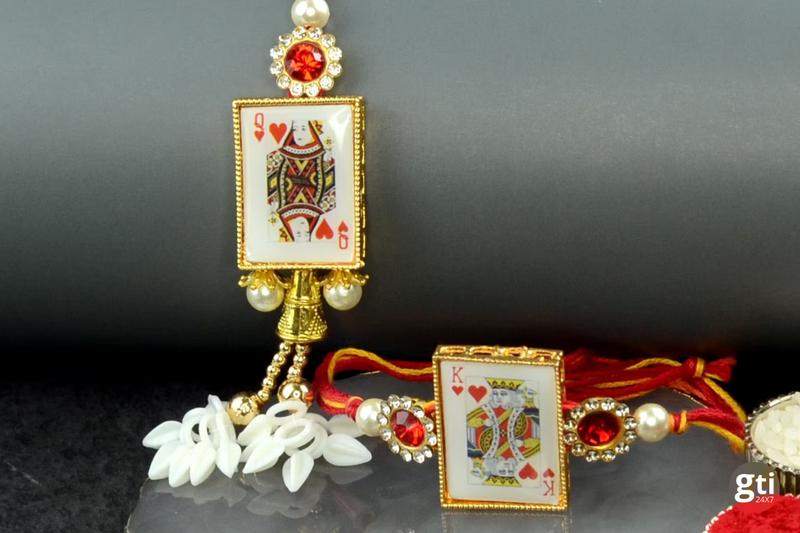
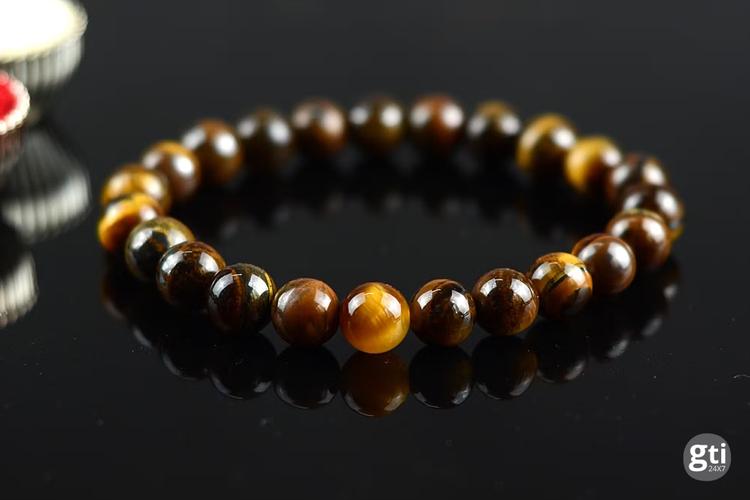
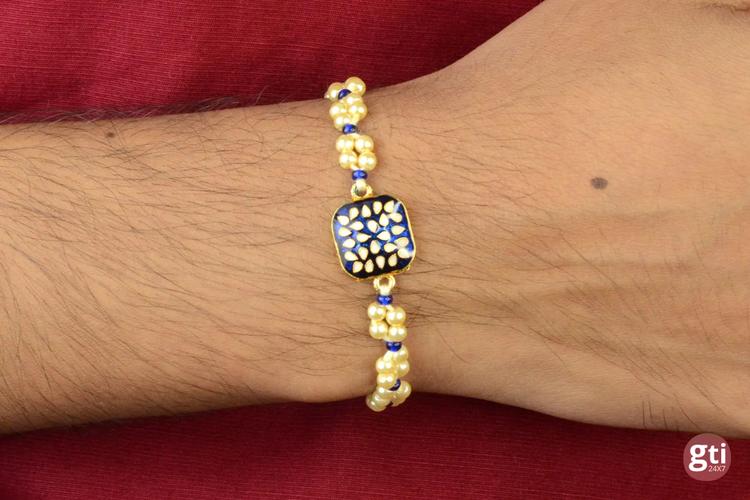
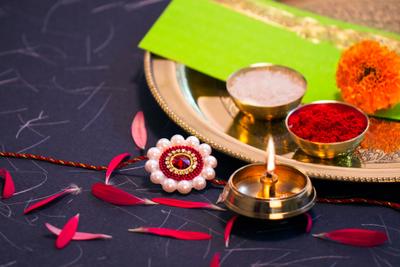
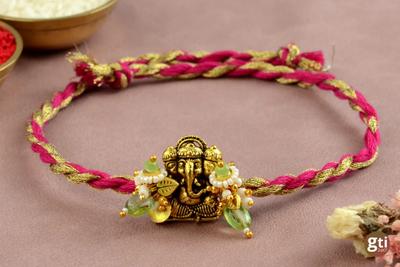
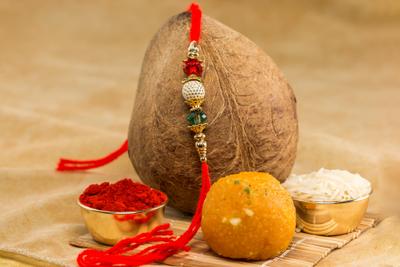
Raksha Bandhan arrives in the month of Shravana and is celebrated on Purnima day when the moon is in its complete form. In Hinduism, Purnima is considered to be the most auspicious day. Hence, the bond of brothers and sisters is celebrated on one of the most auspicious days of all. We all know how the day cherishes the unbreakable bond of brother and sister tied together with the strings of Rakhi. It may seem that the brother is the one who wears the Rakhi on his wrist. But the sister who ties it is also the one to be enwrapped with her brother in the bond forever. The string of Rakhi is a very significant accessory that enhances the precious bond of the siblings. Hence, following the traditions to wear it and preserve it properly is also a cause of concern. Many ponder what to do with Rakhi after the day is over, and the most important question is when to remove it from the hand. As the complete ritual is followed by the phases and positions of the moon and the planets, the correct time, or ‘Tithi’ changes every year, so there is no fixed correct time. Hence, before starting the ritual, one has to know the correct way to commence the ritual. As there are many more rituals that one has to follow for Raksha Bandhan, we know that being aware of every tradition is important. But it is also difficult to know everything. Thus, we have evaluated every tradition and answered every possible question of ‘What to do with the Rakhi after Raksha Bandhan?’
What Should You Do with a Rakhi After Raksha Bandhan?
Unlike the Rakhi-tying ceremony, which is associated with traditional Hindu rituals, there is no universally prescribed scriptural rule in texts such as the Vedas or Puranas that dictates exactly when or how a Rakhi should be removed. Practices vary across regions, families, and religious traditions.
Traditional Practices
Many Hindu families follow customs passed down through generations, including:
-
Wearing the Rakhi for a few days or until it naturally loosens.
-
Removing it respectfully rather than discarding it casually.
-
Placing the Rakhi near a home altar before immersion or disposal.
-
Immersing the Rakhi in a clean river or other natural water body where this is locally practiced.
-
Wrapping the Rakhi in a biodegradable cloth or paper before respectfully placing it under a tree or in a garden, especially if it is made from natural materials.
Guidance from Priests
Many Hindu priests explain that a Rakhi is a sacred thread, or raksha sutra, tied with prayers for protection, blessings, and well-being. Because it is associated with a ritual of devotion and affection, they generally recommend handling it respectfully after removal rather than discarding it with ordinary household waste. Depending on family or regional custom, it may be kept in a prayer area, preserved as a memory of the festival, or disposed of in a respectful and environmentally conscious way.
Scriptural Background
The idea of a raksha sutra (protective thread) appears in Hindu ritual literature and is associated with prayers for protection and blessings. Texts such as the Bhavishya Purana describe the ritual significance of a protective thread, while Vedic traditions—including references to protective threads in the Atharva Veda—illustrate the long-standing symbolism of sacred threads in Hindu practice. These texts, however, do not prescribe a universal method for removing or preserving a Rakhi after the festival.
Cultural Perspective
Scholars of Hindu traditions note that many festival customs develop through living traditions rather than through explicit scriptural instructions. As a result, practices related to Rakhi preservation and disposal vary widely from one region to another and even from one family to the next. In some households, the Rakhi is kept as a cherished reminder of the bond between siblings; in others, it is respectfully removed after the festival and placed in a clean or sacred space according to local custom. These differences reflect the diversity of Hindu practice, where regional traditions, family memory, and personal devotion often shape how sacred objects are treated, alongside the broader value of showing respect for items associated with ritual and blessing.
Historical Origin
The practice of respectfully removing or preserving a Rakhi after Raksha Bandhan has evolved over centuries through regional customs and family traditions, rather than from a single religious rule. While the festival itself has ancient roots in the Hindu tradition of the raksha sutra (protective thread), there is no universally accepted scriptural instruction in the Vedas or Puranas prescribing exactly how or when a Rakhi should be removed after the celebration. The concept of the raksha sutra is mentioned in Hindu ritual traditions, where a sacred thread is tied during ceremonies as a symbol of divine blessings, protection, and well-being. The Bhavishya Purana describes the significance of a protective thread in the story of Indra and Indrani, while the Atharva Veda contains references to protective amulets and sacred threads used in Vedic rituals. These references establish the spiritual importance of sacred threads but do not provide specific guidance on the post-festival handling of a Rakhi. Over time, Hindu communities developed their own customs for treating sacred objects with reverence. As a result, many families began removing the Rakhi respectfully after a few days, placing it in a home shrine, preserving it as a keepsake, or disposing of it according to local traditions. These practices reflect the broader Hindu principle of showing respect for items associated with worship and blessings. Today, customs vary across India. Some households preserve the Rakhi as a cherished reminder of the sibling bond, while others follow regional traditions of respectful disposal. This diversity illustrates the living nature of Hindu traditions, where cultural practices continue to evolve while maintaining the festival's core values of love, gratitude, and mutual care.
Environmentally Responsible Practice
If your Rakhi contains plastic, metal, beads, glitter, or other synthetic decorations, try to separate any recyclable components before disposal. Threads made from natural fibers may be compostable in some cases, but mixed-material Rakhis often need to be handled carefully because not every part can be recycled or biodegraded together. Choosing eco-friendly Rakhis made from cotton, jute, seeds, paper, or other biodegradable materials can make respectful disposal easier after the festival while also reducing environmental impact. These sustainable options are especially useful for families who want to honor the tradition without adding unnecessary waste, and they can be disposed of more responsibly once the celebration is over.
Perspectives on Raksha Bandhan
Interview with a Hindu Priest
Q1. What is the spiritual significance of tying a Rakhi?
Response:
"The Rakhi is tied as a symbol of prayers for the well-being, protection, and prosperity of the person wearing it. While many people associate the festival with brothers and sisters, the sacred thread also represents blessings, goodwill, and a commitment to care for one another."
Q2. Is there a specific Muhurat for tying a Rakhi?
Response:
"Many families consult the Panchang and avoid tying the Rakhi during Bhadra Kaal. The auspicious timing depends on the Purnima Tithi and the city in which the ceremony is performed."
Q3. What should be done with the Rakhi after the festival?
Response:
"There is no universally prescribed rule in Hindu scriptures. Many families remove it respectfully after a few days and follow local customs for its preservation or disposal."
Interview with a Cultural Expert
Q1. How has Raksha Bandhan evolved over the centuries?
Response:
"Raksha Bandhan has evolved from the ancient concept of the *raksha sutra* (protective thread) into a festival that celebrates sibling relationships and mutual care. Today, many families also use the occasion to strengthen bonds with cousins, close friends, and extended family members, reflecting the festival's evolving social significance."
Q2. Why does Raksha Bandhan continue to be relevant in modern society?
Response:
"In today's fast-paced world, Raksha Bandhan provides families with an opportunity to reconnect. The festival has adapted to changing lifestyles, with siblings celebrating through virtual ceremonies, courier deliveries, and personalized gifts while preserving its core values of love, gratitude, and lifelong support."
Q3. Are there regional differences in the way Rakhi is celebrated?
Response:
"Yes. Customs vary considerably across India. Some regions emphasize traditional rituals with family gatherings, while others combine Raksha Bandhan with local festivals observed on the same day. Food, Rakhi styles, and ceremonial practices often reflect regional traditions."
Q4. Has the meaning of 'protection' changed over time?
Response:
"Many contemporary families interpret protection as mutual emotional support rather than a one-sided responsibility. Rakhi has become a celebration of equality, trust, encouragement, and shared responsibility between siblings."
Q5. What role do handmade and personalized Rakhis play today?
Response:
"Handmade Rakhis represent thoughtfulness and creativity. They allow people to express affection through time and effort, making the gift more personal than simply purchasing a ready-made Rakhi."
Q6. What message would you like readers to remember about Raksha Bandhan?
Response:
"At its heart, Raksha Bandhan is about nurturing relationships. Whether siblings live together or across continents, the festival reminds us that meaningful connections are sustained through love, respect, and shared traditions."
Regional Raksha Bandhan Traditions
| Region |
Distinctive Customs |
| North India |
Traditional Rakhi ceremony with tilak, aarti, sweets, and family gatherings. |
| Rajasthan |
Some communities celebrate Lumba Rakhi, tying a Rakhi to the sister-in-law's bangle as a symbol of welcoming her into the family. |
| Gujarat |
Families often celebrate Raksha Bandhan alongside Shravani Purnima, with temple visits and community rituals. |
| Maharashtra |
Raksha Bandhan coincides with Narali Purnima, when many coastal communities offer coconuts to the sea before family celebrations. |
| West Bengal |
Rakhi is celebrated among siblings and is also observed by many as a symbol of friendship, harmony, and social unity. |
| Odisha |
The festival coincides with Gamha Purnima, with regional customs that include honoring cattle in agricultural communities. |
| South India |
The day may coincide with Avani Avittam (Upakarma) for many Brahmin communities, while families also celebrate Raksha Bandhan according to local traditions. |
Common Misconceptions
1. You must remove the Rakhi on a specific day.
Reality: There is no universally accepted scriptural rule specifying when a Rakhi must be removed. Many families wear it for a few days, while others keep it on until it naturally loosens or follow their family tradition.
2. Throwing the Rakhi in the trash is the only option.
Reality: Since the Rakhi is tied during a sacred ritual, many families prefer to remove it respectfully. Depending on local customs, it may be placed in a home altar, immersed where appropriate, or disposed of in an environmentally responsible manner.
3. Hindu scriptures clearly explain how to preserve or dispose of a Rakhi.
Reality: Major Hindu scriptures, including the Vedas and Puranas, do not prescribe a universal method for removing or preserving a Rakhi. Most practices are based on regional customs, family traditions, and guidance from local priests.
4. A Rakhi loses all significance once the festival is over.
Reality: Many people keep the Rakhi as a cherished keepsake because it symbolizes the enduring bond between siblings and the blessings exchanged during the ceremony.
5. Every Hindu family follows the same Rakhi customs.
Reality: Rakhi traditions vary widely across India. The way a Rakhi is worn, removed, preserved, or respectfully disposed of often depends on regional practices, community traditions, and family beliefs.
6. Eco-friendly and decorative Rakhis should be disposed of in the same way.
Reality: Eco-friendly Rakhis made from cotton, jute, paper, or seed materials can often be disposed of more sustainably, while Rakhis containing plastic, metal, glitter, or synthetic decorations should be separated where possible to reduce environmental impact.
7. Preserving a Rakhi at home is considered inauspicious.
Reality: There is no widely accepted religious prohibition against keeping a Rakhi. Many families preserve it in a memory box, prayer area, or alongside other cherished keepsakes as a symbol of love and family connection.
8. The Rakhi is only a decorative thread.
Reality: In Hindu tradition, the Rakhi is regarded as a raksha sutra—a sacred thread tied with prayers for protection, well-being, and affection. While customs surrounding it differ, many families treat it with the same respect given to other ritual objects.
How Families Preserve or Respectfully Dispose of Rakhis:
Here are some of the real stories, customer experiences, or cultural observations that I could gather after several interactions.
Preserving Rakhi as a Family Keepsake
One family stores every Rakhi in a small memory box along with greeting cards and childhood photographs. Looking through the collection each year has become a cherished pre-Rakhi tradition, reminding siblings of how their relationship has grown over time.
Observation: For many families, preserving a Rakhi is less about ritual and more about safeguarding memories and celebrating the sibling bond.
A Respectful Farewell
After wearing the Rakhi for several days, another family removes it carefully and places it in their home prayer area before respectfully disposing of it according to their local customs. They see this as a way of honoring the blessings associated with the sacred thread.
Observation: Many households prefer a respectful method of removal rather than treating the Rakhi as ordinary waste.
Choosing an Eco-Friendly Rakhi
A family that prefers sustainable celebrations uses cotton and seed-paper Rakhis. After the festival, the biodegradable Rakhi is composted or planted according to the product's instructions.
Observation: Eco-friendly Rakhis are becoming increasingly popular among families who wish to reduce waste while maintaining festive traditions.
Long-Distance Siblings
A sister living abroad sends a Rakhi to her brother every year. He keeps each Rakhi in a scrapbook alongside handwritten notes and photographs from previous celebrations, creating a personal record of their shared memories.
Observation: When siblings live apart, preserving a Rakhi often becomes a meaningful way to stay emotionally connected across distances.
What to Do If Your Rakhi Includes Silver or Gold
Rakhis made with silver, gold, or other precious metals are often considered keepsakes rather than disposable festive threads. Since they combine sentimental and material value, many families choose to preserve them with care.
Preserve It as a Keepsake
-
Clean the silver or gold ornament gently with a soft, dry cloth after removing the Rakhi.
-
Store it in a jewelry box, fabric pouch, or airtight container to protect it from scratches and tarnishing.
-
Keep it separately from other jewelry to prevent damage.
Repurpose the Precious Metal
Many jewelers can help transform the silver or gold element into the following:
-
A pendant
-
A bracelet charm
-
Earrings
-
A keychain
-
A decorative keepsake
This allows you to preserve both the memory of Raksha Bandhan and the value of the precious metal.
Reuse It for Future Celebrations
If the metallic centerpiece remains in good condition, you can attach it to a new thread and use it as a Rakhi in a future year. This is a practical way to preserve a meaningful design while reducing waste.
Handle the Thread Separately
Once the precious metal ornament has been removed, the remaining thread can be handled according to your family's customs. Some families keep it as a memento, while others dispose of it respectfully, especially if it was tied as part of a religious ritual.
Avoid These Mistakes
-
Don't throw silver or gold Rakhis away with household waste.
-
Don't expose precious metals to harsh chemicals or excessive moisture, as they may lose their shine.
-
Avoid bending or forcing delicate ornaments, as intricate designs can become damaged.
Insurance and Valuation
If your Rakhi contains a substantial amount of gold or silver or features gemstones, consider storing it with your other valuable jewelry. For heirloom or high-value pieces, keeping the purchase receipt or valuation certificate can be helpful for future reference or insurance purposes. A silver or gold Rakhi is more than a festive accessory—it can become a cherished keepsake or family heirloom, preserving both the emotional significance of the occasion and the lasting value of the precious metal.
Sources:
- Bhavishya Purana (for the concept of the raksha sutra)
- Atharva Veda (protective thread traditions)
- Indira Gandhi National Centre for the Arts for documentation on Indian ritual traditions
- Ministry of Culture for cultural context
- Diana L. Eck and Vasudha Narayanan for academic perspectives on Hindu festivals and living traditions.
These sources provide a balanced, evidence-based foundation while clearly distinguishing documented traditions from regional customs.