In the din and bustle of our mundane life, where some of us live far away to pursue our dreams, with the world flowing relentlessly like a gushing river, Raksha Bandhan is a simple festival with deep spiritual and emotional reverberations. The threads of Rakhi are what connect the siblings, no matter where they are. The festival is a respite that brings back memories that have shaped our childhood and keep us motivated. The day invites us to pause, reflect, connect, and reconnect with our beloved siblings. It is more than just a day for people in India that brings childhood nostalgia like rain in the scorching desert. It is the bliss that makes our lives better, evoking joy, laughter, and an overwhelming sense of nostalgia. Hence, Raksha Bandhan is a festival that embraces the unique bond of brother and sister and cherishes their affection for each other. So, for an extraordinary celebration, geographical distance or any obstacle is never a barrier that can stop a sister from tying a rakhi on their brother’s hand. Plenty of stories and legends behind the festival of Rakhi signify the prowess of the delicate yet strong threads of Rakhi. Our ancestors also taught us how to perform the ritual of Rakhi faithfully.
On which hand should Rakhi be tied?
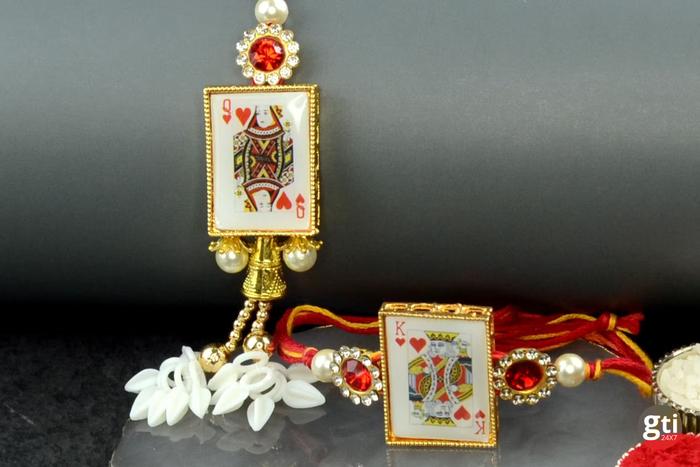
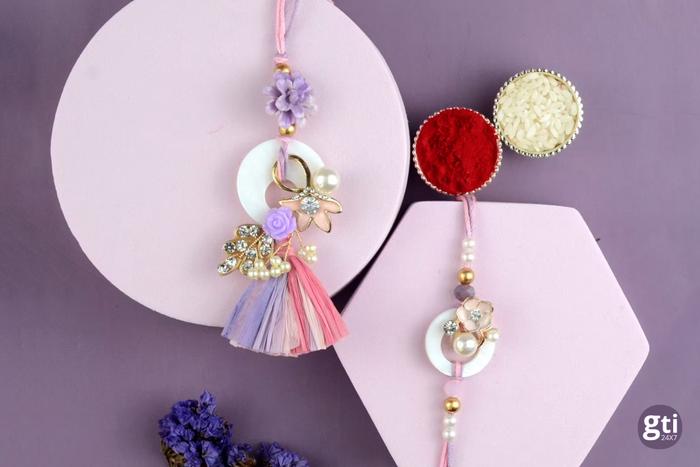
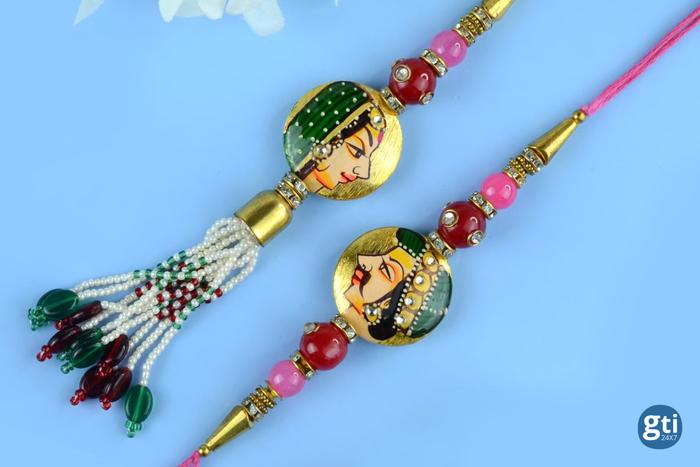
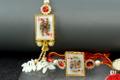
As we know by now, tying a Rakhi around the wrist of a brother is a gentle reminder that has many layers of meaning to it. So, knowing on which hand one should tie the Rakhi is a very important question that arises among us. But before that, there is another thing that you must know. If you want to tie Rakhi to your sister-in-law or Bhabhi, then you should keep one thing in mind: there are distinct Rakhis for brothers and sisters-in-law. The one that is tied around the wrist of a sister-in-law is called a Lumba Rakhi. It is made with intricate designs and with efflorescent colors to signify the feminine and divine attributes of females. This looks a bit different from the Rakhi for brothers and also comes in a set, which is called the Bhaiya and Bhabhi Rakhi.
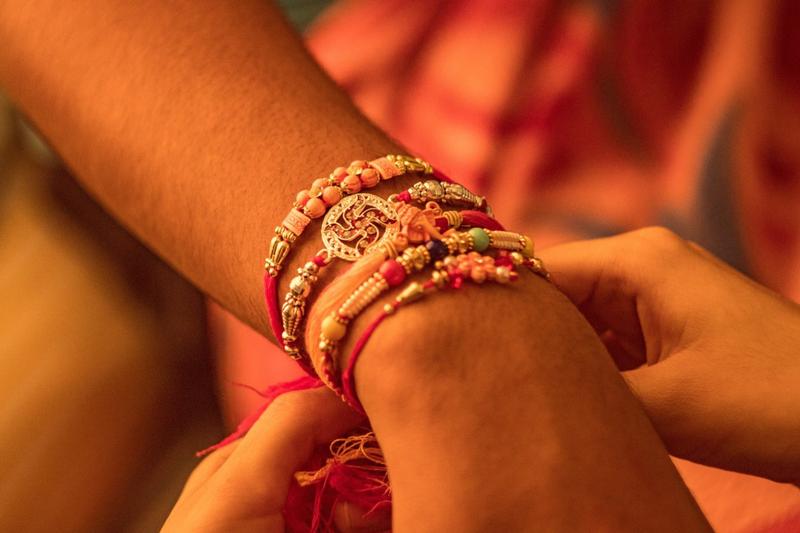
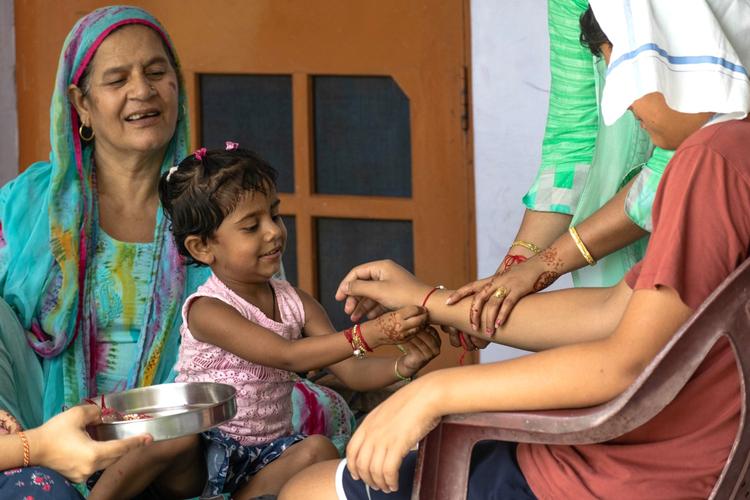
So, unearthing the reasons and symbolism from the scriptures and the Vedas. We have come across that the right hand is the hand in which the Rakhi should be tied. If we look closely, then we’ll find that in most of the rituals and puja ceremonies we use our right hand to offer something to the Gods. We even accept ‘Prashad’ from our right hand, but have you ever wondered why? There is a reason behind every ritual that we perform, and our predecessors have left the answers in the Vedas. Let us know why the right hand is believed to be auspicious. If you are away from your brother on Raksha Bandhan, use our services to send rakhi online in India to him.
Why is the Right hand preferred?
The Hindu scriptures have distinct connotations for the usage of the right hand. The right hand is mostly considered to be masculine, meaning strength, and the left is feminine, meaning nature. As the Nadi Shastra or astrology, reveals the destiny of the past, present, and future. These energies channel through the right hand. So, when a sister ties rakhi on the right hand, she harnesses the energy channel and eradicates any doshas. Ayurveda unveils that the human body is made of three fundamental components. Among these are the three doshas that regulate the living body. Vatta, Pitta, and Kapha are the Tridoshas that influence our behavior, and for a harmonious existence, these should be balanced and harnessed correctly. These components are regulated when the Rakhi is tied around the right wrist. This activates and regulates the Tridoshas, helping eliminate severe obstacles and supporting overall well-being.
The right wrist is considered the auspicious hand (dakshina hasta) in many Hindu rituals. It is the hand used for performing sacred actions such as:
- Offering prayers and making religious offerings
- Performing rituals and ceremonies
- Giving blessings and gifts
- Accepting sacred objects
- Taking vows and commitments
The ancient systems of measuring time also started clockwise from the right, and thus, the right hand is preferred to regulate the strength, vitality, and the flow of time. Hence, by tying the Rakhi on the right hand of the brother and sister-in-law, the Tridoshas, Nadi shastra, and spirituality are activated and regulated to create a harmonious balance. This is the reason why tying Rakhi on the right hand of Bhaiya and Bhabhi is considered auspicious. This works alongside the feeling of being protected by the sister’s love and care, which makes the brother and the sister-in-law feel secure. In this case, you can send rakhi gift hampers for sisters online to celebrate the day better.
Why is the left wrist associated with married women?
Traditional Hindu ritual manuals (Paddhatis) and priestly practice generally instruct that a protective thread is tied on the right wrist of men and unmarried women, while married women often wear it on the left wrist, reflecting long-standing ritual convention rather than a direct scriptural mandate.
Several traditional explanations are offered:
1. Symbolic Association with Shakti (Divine Feminine)
In Hindu philosophy, the left side of the body is symbolically associated with feminine energy (Shakti), while the right side is often associated with masculine energy or action. Since married women are regarded as embodiments of Griha Lakshmi (the prosperity and protective energy of the household), some ritual traditions consider the left wrist appropriate for sacred threads.
This symbolism also appears in iconography, where the goddess or wife occupies the husband's left side (vāma-bhāga), giving rise to expressions such as Vāmāṅgī ("she who occupies the left side").
2. Ritual Convention
Many priests follow the convention that:
Men and unmarried girls: right wrist
Married women: left wrist
This convention is commonly observed during ceremonies involving the tying of a kalava (mauli), vows (vratas), and other domestic rituals. It reflects customary ritual practice passed down through priestly lineages rather than a rule specific to Raksha Bandhan.
3. Distinction in Ritual Roles
Traditional Hindu ritual manuals often distinguish ritual procedures based on the participant's role and marital status. The different wrists serve as a symbolic distinction rather than implying any difference in the efficacy or sanctity of the thread.
Is this mentioned in the scriptures?
There is no major Vedic text, Purana, or Dharmaśāstra that explicitly states, "Married women must wear the Raksha Sutra on the left wrist." The practice comes from regional traditions, priestly customs, and ritual manuals (Paddhatis), which interpret broader Hindu symbolism.
In many parts of North India, priests tie the sacred thread on the left wrist of married women.
In several regions of South India and Western India, the wrist used may differ according to the specific ritual or local tradition.
During Raksha Bandhan, many sisters tie Rakhi on the right wrist of their brothers regardless of marital status because the festival specifically celebrates the sibling bond.
Scholarly View
Scholars of Hindu ritual generally distinguish between śāstra (scriptural injunction) and ācāra (established custom). The left-wrist practice for married women belongs to the latter. As P. V. Kane notes in his History of Dharmaśāstra, many ritual practices followed in Hindu households evolved through local customs and priestly traditions rather than explicit scriptural injunctions.
References
- P. V. Kane, History of Dharmaśāstra, Bhandarkar Oriental Research Institute.
- Gonda, Jan. Ancient Indian Kingship from the Religious Point of View (for symbolism associated with ritual practice).
- Stella Kramrisch, The Hindu Temple, which discusses the symbolic significance of the left and right sides in Hindu thought.
- Gṛhya Sūtras (various schools), which describe domestic rituals but do not prescribe a universal left-wrist rule for married women.
Spiritual Significance of Tying Rakhi
To understand the rituals of Rakhi and the reasons behind them, you need to understand the spiritual beliefs. The religious beliefs, ancient writings, historical, and mythological tales state the significance of the festival of Raksha Bandhan. The thread of Rakhi also signifies the vow the brother takes of cherishing and protecting his sister. Alongside, it also expresses a sister’s devotion and prayers to keep her brother protected from all sorts of evils. This is well-conveyed in the historical story of Rani Karnavati and Emperor Humayun. When the Rajputs in Chittor were troubled by the invasion of the Mughals, Rani Karnavati, the then-ruler of Rajasthan, knew she would not be able to overcome the vast Mughal army. Sending rakhi to the Mughal emperor Humayun was considered to protect her people, who were in another region for a military campaign. On receiving the Rakhi, Humayun was touched by the heartwarming gesture of seeking protection, and he ordered his troops to change direction. Likewise, the story of Draupadi and Krishna also shows the very same sentiment. This shows the deep affection and strength Rakhi has, where the brother protects her sister in any circumstances. It also shows how the brother is protected by the force of Rakhi in the story of King Porus, who protected Alexander because of his Rakhi sister, Roxana. Thus, the simple festival of Rakhi has a great significance that binds the brother and sister together with the invisible thread of affection, trust, and protection.
Scriptural and Scholarly Reasons
The belief that Rakhi should be tied on the right wrist is primarily a customary practice derived from broader Hindu ritual traditions, rather than a rule explicitly stated in ancient Hindu scriptures specifically for Raksha Bandhan. Below are references that can be cited for the symbolism of the right hand, sacred threads, Ayurveda, and traditional concepts of energy pathways.
1. The Right Hand (Dakṣiṇa Hasta) in Hindu Ritual Traditions
In Hindu ritual practice, the right hand is traditionally considered the auspicious hand used for sacred actions. This practice is reflected in several Dharmashastra and Gṛhya Sūtra traditions, which describe ritual actions such as offerings, ācamanam (ritual purification), and receiving or giving sacred substances through the right hand.
Reference:
- Manusmriti (Manusmṛti 2.58–2.63) discusses rules of ritual conduct, cleanliness, and appropriate practices for religious actions, including the importance of purity during sacred activities. While it does not specifically mention Rakhi, later Hindu ritual traditions interpret these principles as supporting the use of the right hand for auspicious acts.
Scholarly reference:
- Patrick Olivelle, Manu’s Code of Law: A Critical Edition and Translation of the Mānava-Dharmaśāstra, Oxford University Press, 2005.
How it connects to Raksha Bandhan:
The Rakhi ceremony involves prayer, blessings, and a sacred vow. Since Hindu ritual customs generally reserve the right hand for auspicious offerings and ceremonial acts, the Rakhi is traditionally tied on the brother’s right wrist.
2. The Right Side in Vedic and Ritual Symbolism
The association of the right side with auspiciousness appears in Vedic ritual literature. The Sanskrit word “dakṣiṇa” means “right” and also refers to a ritual offering (dakṣiṇā) given to priests after a sacrifice.
Reference:
- Shatapatha Brahmana (Śatapatha Brāhmaṇa, associated with the Śukla Yajurveda) contains extensive discussions of ritual order, purity, and sacrificial procedures. The term dakṣiṇa appears throughout Vedic literature in relation to ritual offerings and proper ceremonial conduct.
Scholarly reference:
- Julius Eggeling (translator), The Śatapatha-Brāhmaṇa According to the Text of the Mādhyandina School, Sacred Books of the East, Vols. 12, 26, 41, 43, 44, Oxford University Press.
Interpretation:
Because dakṣiṇa carries meanings associated with “right,” “skillful,” and “auspicious,” later Hindu traditions developed a symbolic association between the right side and sacred responsibility.
3. Sacred Threads and Protection: Connection With Rakhi Traditions
Although the Raksha Bandhan ritual itself developed historically over time, it shares symbolic similarities with other Hindu protective threads such as the Kalava/Mouli.
The tying of sacred threads for protection is referenced in ritual traditions connected with the Atharvaveda, which contains hymns related to protection, healing, and auspicious objects.
Reference:
- Atharvaveda (Atharvaveda 8.5; 19.9) includes protective hymns and rituals involving objects believed to provide spiritual safeguarding.
Scholarly reference:
- William Dwight Whitney (translator), Atharva-Veda Saṃhitā, Harvard Oriental Series, 1905.
Connection:
While these hymns do not describe Raksha Bandhan as celebrated today, they provide the broader cultural background for the Hindu tradition of wearing protective threads.
4. Nadi Shastra and the Right Side: Traditional Yogic and Ayurvedic Concepts
Claims connecting the right side of the body with energy channels generally come from Yoga traditions, rather than mainstream Vedic scripture.
According to traditional Yoga philosophy, the subtle body contains channels called nāḍīs, with three principal pathways:
- Iḍā Nāḍī – associated traditionally with the left side, lunar energy, cooling qualities, and the parasympathetic-like calming principle.
- Piṅgalā Nāḍī – associated traditionally with the right side, solar energy, heat, activity, and dynamism.
- Suṣumṇā Nāḍī – the central channel associated with spiritual awakening.
Reference:
- Hatha Yoga Pradipika by Svātmārāma
Key verses:
- Haṭha Yoga Pradīpikā 2.4–2.6 discusses purification of nāḍīs through yogic practices.
- Haṭha Yoga Pradīpikā 3.1–3.3 discusses the importance of Suṣumṇā and the movement of vital energy (prāṇa).
Scholarly reference:
- Swami Muktibodhananda (trans.), Hatha Yoga Pradipika: Light on Hatha Yoga, Bihar School of Yoga, 1993.
Important clarification:
Traditional Yoga texts do not state that a Rakhi must be tied on the right wrist because of nāḍīs. The connection between Rakhi placement and nāḍī concepts is a modern interpretive explanation, not a direct scriptural injunction.
Addressing Conflicting Traditions of Tying Rakhi
The tradition of tying a Rakhi is widely practiced across India, but there is no universally prescribed rule about the wrist in every community or religious tradition. Customs have evolved over centuries and often vary by region, family lineage, and local practices.
In many Hindu households, a Rakhi is traditionally tied on the right wrist of a brother. This practice is linked to the broader Hindu custom of tying sacred threads (raksha sutra, mauli, or kalava) on the right wrist of men during religious ceremonies, where the right side is associated with duty, action (karma), and auspiciousness.
However, some ritual traditions distinguish between men and women when tying sacred threads. In certain regions and priestly traditions, men receive the sacred thread on the right wrist, while women receive it on the left wrist, reflecting ritual symbolism rather than a Raksha Bandhan-specific rule. These distinctions are more commonly associated with Vedic ceremonies, temple rituals, and protective threads tied by priests than with the festival of Raksha Bandhan itself.
Regional customs also influence Rakhi traditions. In North India, tying the Rakhi on the brother's right wrist is the most widely followed practice. Elsewhere, families may adapt the ritual according to local customs, personal beliefs, or convenience. Modern celebrations have further broadened these practices, with sisters tying Rakhis to sisters, cousins, friends, military personnel, mentors, and even symbolic protectors, where the choice of wrist is often left to family tradition rather than religious prescription.
Because Raksha Bandhan is a cultural and familial festival as much as a religious one, the spirit of the ritual—expressing love, blessings, and a promise of mutual care—is considered more important than strict adherence to a particular wrist. Acknowledging these regional and doctrinal variations offers a more accurate and inclusive understanding of the festival while respecting India's diverse traditions.
Marian Ritu Chakraborty
Marian has been a content writer for 3 years at GiftstoIndia24x7. Based in Kolkata, she crafts compelling articles, accurate product descriptions, and much more. She researches and writes articles that make finding the perfect gift for your loved ones easy. When she is not writing, she is seen researching, reading blogs, and books.